HKUST and CKSRI Researchers Help Create Artificial Cilia That Match Nature’s Speed and Precision
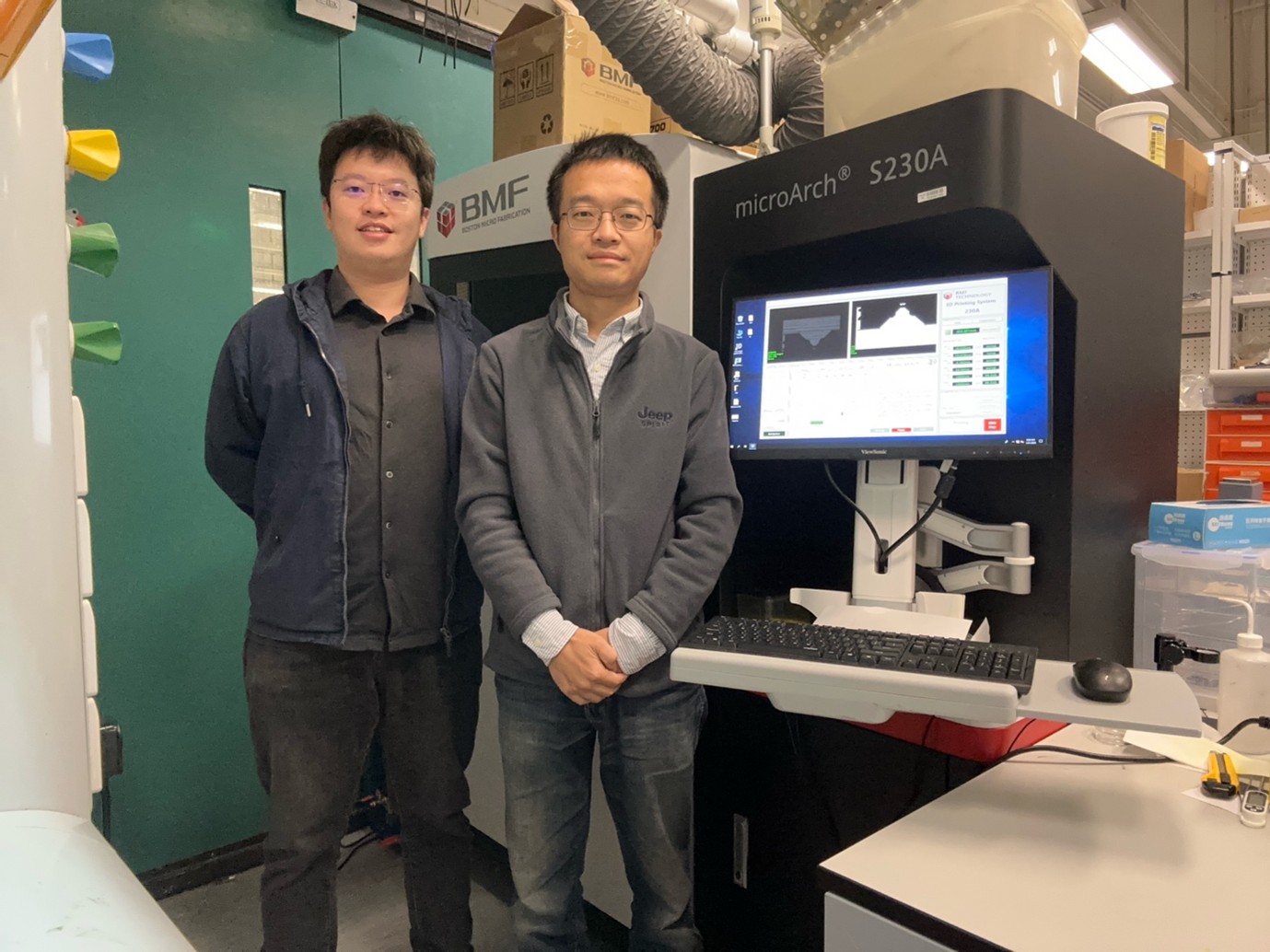
HKUST researchers, led by Dr Wenqi Hu, Assistant Professor in the Department of Mechanical Engineering and a core member of the Cheng Kar-Shun Robotics Institute(CKSRI), have contributed to the development of a new generation of artificial cilia that closely replicate the speed, softness, and three-dimensional coordination of their biological counterparts. The breakthrough, published in Nature, sets a new benchmark for microscale actuation and opens up new opportunities in microrobotics, microfluidics, and biomedical technologies.
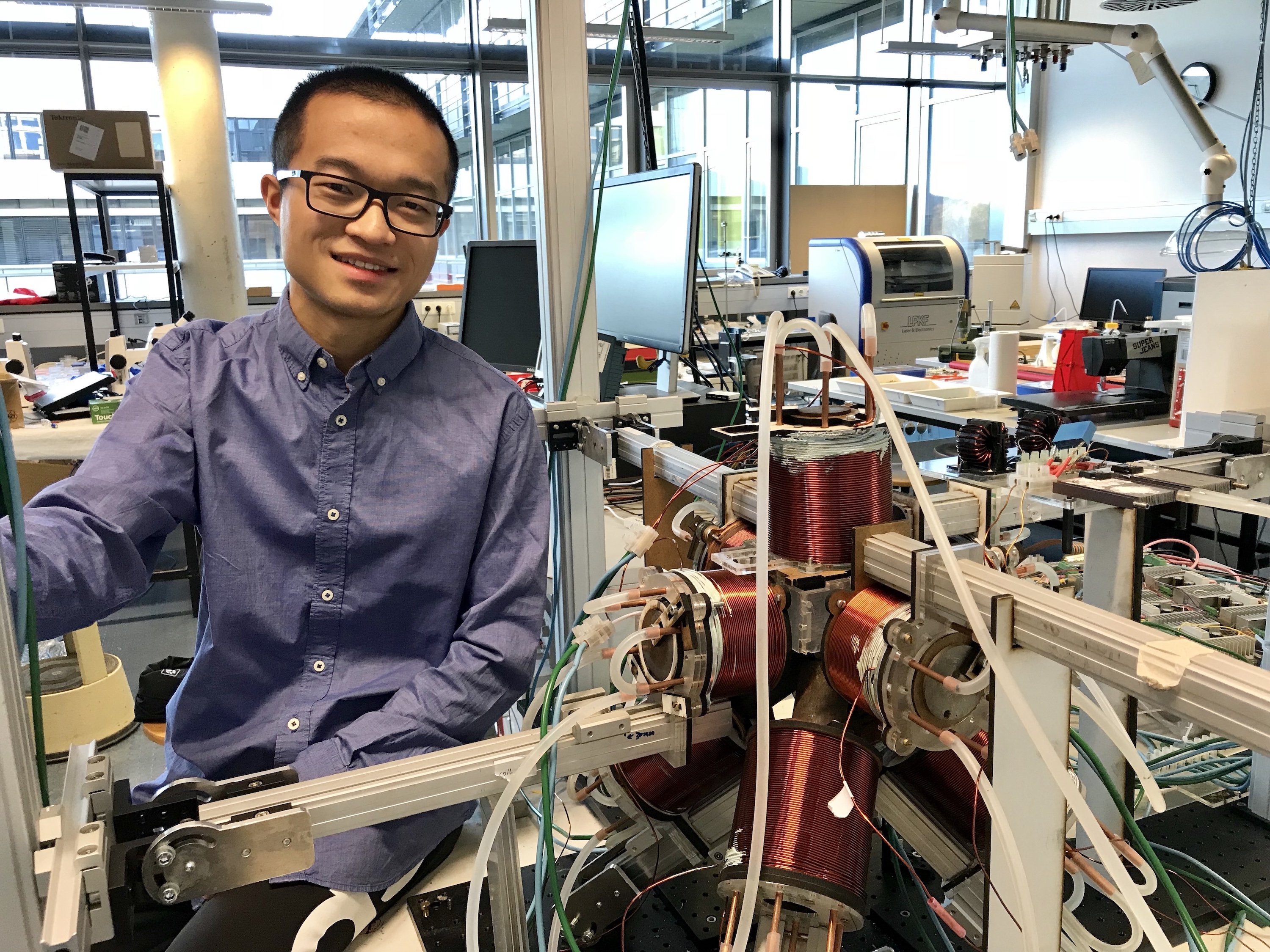
Cilia are microscopic, hair-like structures widely found in living organisms, where their rhythmic beating plays essential roles in fluid transport, sensing, and development. In the human body, cilia help clear mucus in the lungs, circulate fluids in the brain, and support early embryonic development. Despite their importance, reproducing the fast, coordinated, and non-reciprocal motion of natural cilia in artificial systems has long remained a major engineering challenge.
In this work, the international research team developed hydrogel-based artificial cilia measuring approximately 18 micrometers in length, comparable in size to natural cilia. Each artificial cilium can be individually programmed to perform fully three-dimensional bending and rotational motions at frequencies of up to 40 hertz, matching the upper range observed in biological systems. When operated collectively in arrays, the artificial cilia generate complex and efficient fluid flows similar to those produced by living tissues.
A key feature of the system is its ability to operate at very low electrical voltages. The artificial cilia are driven at around 1.5 volts, well below the electrolysis threshold of water, enabling fast and responsive actuation while remaining compatible with aqueous and potentially biological environments. The system also demonstrated strong durability, maintaining stable performance over hundreds of thousands of actuation cycles.
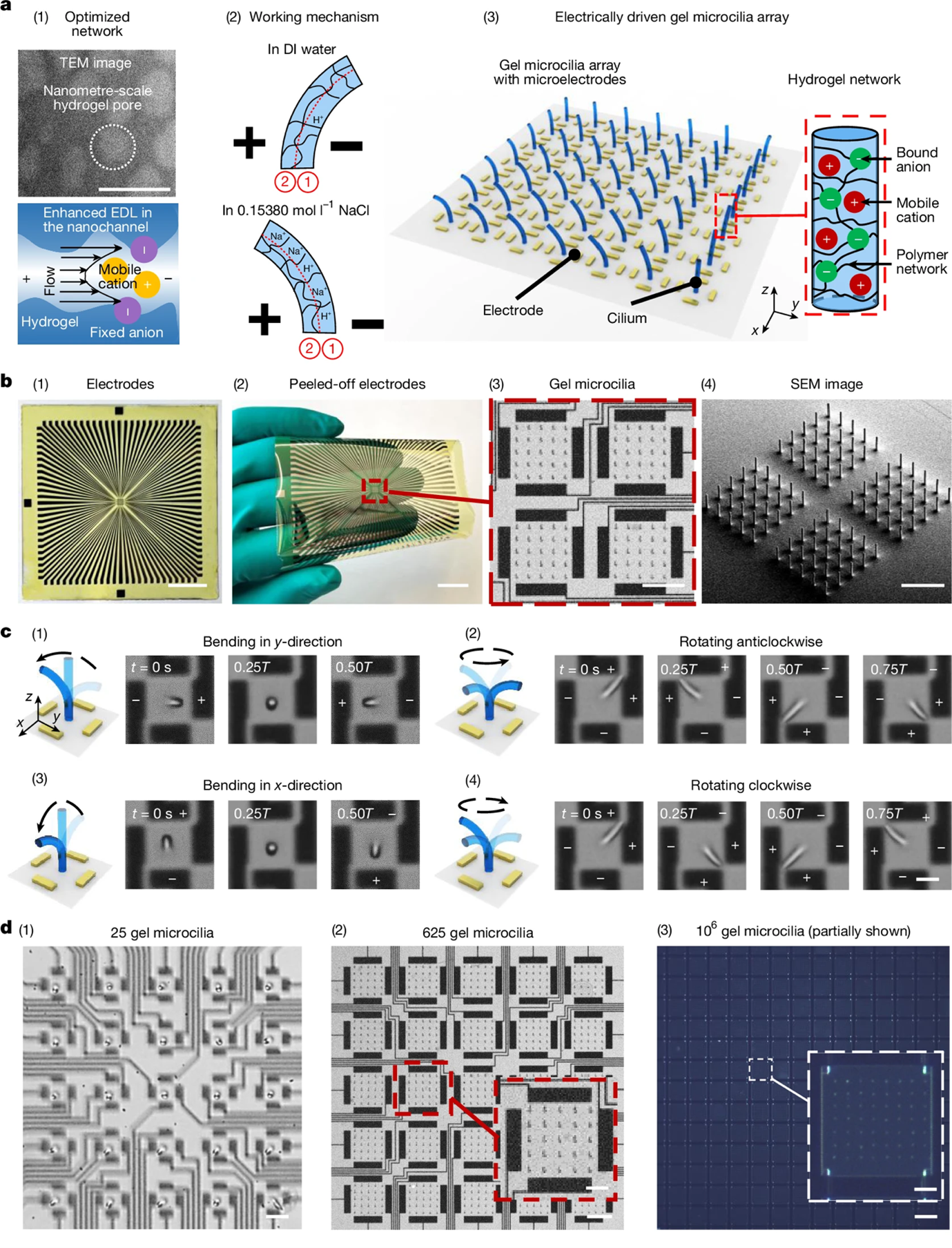
HKUST researchers, led by Dr Wenqi Hu, played a key role in the design of the hydrogel material system and in elucidating the physical mechanisms that enable rapid, low-voltage actuation. The team engineered nanoscale porosity within the hydrogel to enhance ion transport under an applied electric field, allowing strong actuation forces to be generated with minimal electrical input.
“This research demonstrates the importance of system-level integration in bio-inspired robotics,” said Dr Hu. “By jointly designing the material microstructure, micro-fabrication strategy, and actuation physics, we were able to achieve fast, controllable, and durable motion at the microscale using very low power.”
Beyond replicating biological motion, the artificial cilia provide a versatile microrobotic actuation platform. Their ability to pump, mix, and transport fluids at small scales could enable new lab-on-a-chip devices, soft microrobots for confined environments, and experimental tools for studying fluid–structure interactions in living systems. In the longer term, the technology may inspire biomedical devices designed to assist or restore cilia-driven functions when natural cilia are damaged or impaired.
The research was conducted through an international collaboration involving HKUST, the Max Planck Institute for Intelligent Systems, and Koç University. HKUST’s participation highlights the role of the Cheng Kar-Shun Robotics Institute as a platform for system-level robotics research, integrating materials science, micro-fabrication, and intelligent actuation to address complex challenges at small scales.
Looking ahead, the research team plans to further explore scalable fabrication, system integration, and testing in more realistic biological and fluidic environments. By combining biological realism with precise engineering control, the work lays the foundation for a new class of microscale machines capable of interacting with their surroundings in ways previously seen only in living systems.